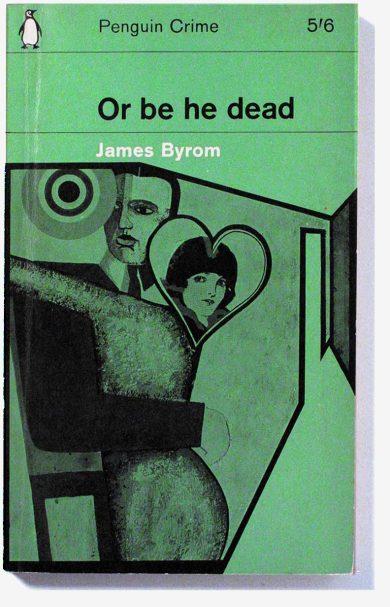
Alan Aldridge is famed for his brilliant career as one of Britain’s great postwar illustrators. But where did he start? This small sample of his Penguin Crime covers can help answer that.
In his early twenties, he was recruited as a trainee by Penguin’s art director Germano Facetti. Considering the latter’s forceful personality, Aldridge even then must have enough charisma to make an impression. Within about four years he replaced Facetti as head art director of fiction and crime. And by then he was a star
The publication dates vary from 1961 to 1965 thus encompassing the first public presentation of the Marber grid in 1961. So Aldridge was trusted with a cover in the first experimental batch of Marber grid covers before its sales success ensured the complete re-badging of Crime in 1962.
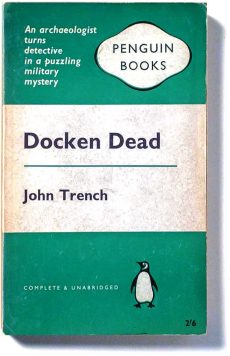
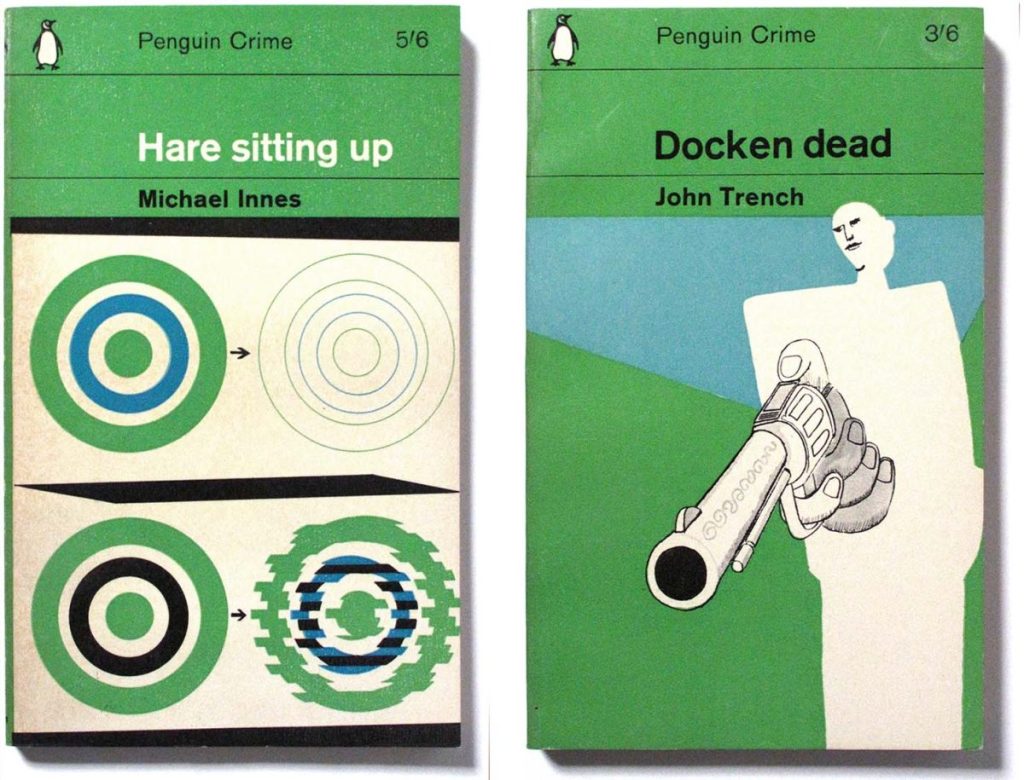
Docken Dead by John Trench had been printed in 1960 in the standard Crime typographic grid and the next year was reprinted Marber grid with an illustration by Aldridge – see below right. This would mean Aldridge was 23 when he rendered it – not a bad start as a designer.
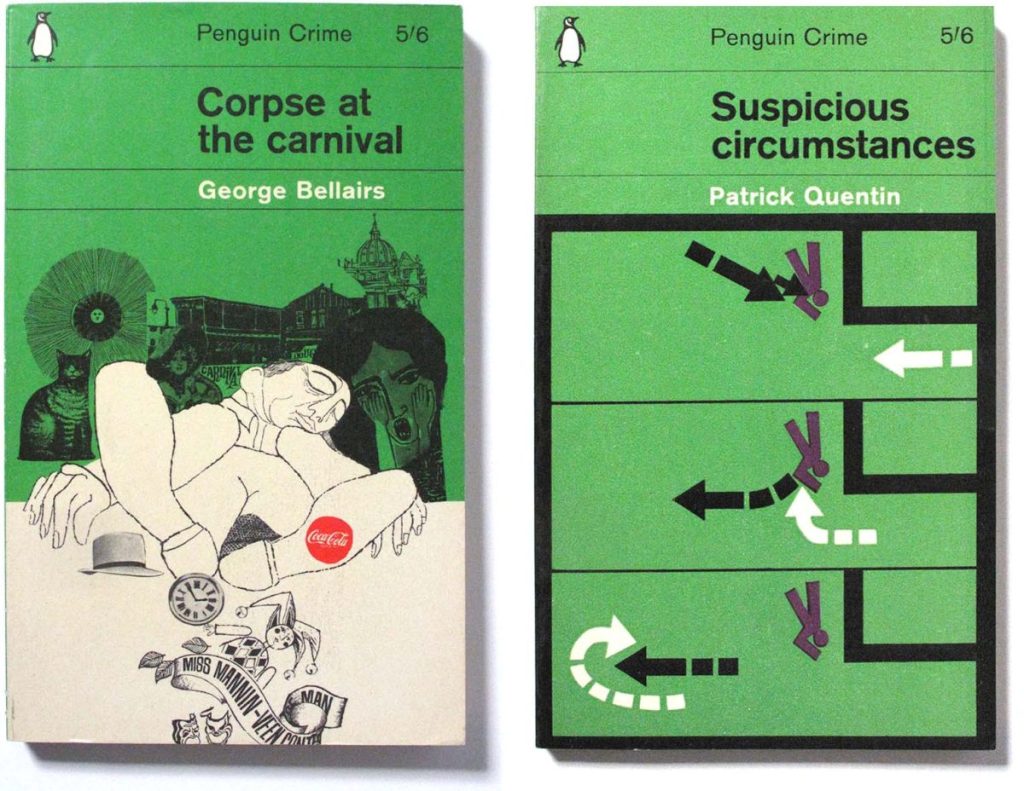
The seven covers are a good sample of the sort of abstracted illustrations favoured for Penguin Crimes in the early 1960s. Like the first twenty covers by Romek Marber, the designs are simple and evidently made quickly – the payments would not have been high. Despite the presumed rush, I think two of them, Operation Pax and Hamlet, revenge! are equal to the best of the Marber-era Crime covers from any illustrator.
That is ironical because Aldridge disliked the Marber grid and got rid of it when he was appointed art director of general books in 1965. As an illustrator in the ‘swinging sixties’, he did not like the artwork he made or commissioned to be constrained in any way by a graphic template.


 PENGUIN SERIES DESIGN
Hello
We had a copy of his Beatles illustrated lyrics and as a youngster I must admit to being a bit scared by the grotesquery – but these covers are just perfect in their angular strangeness. Thanks for posting Laura
LikeLike