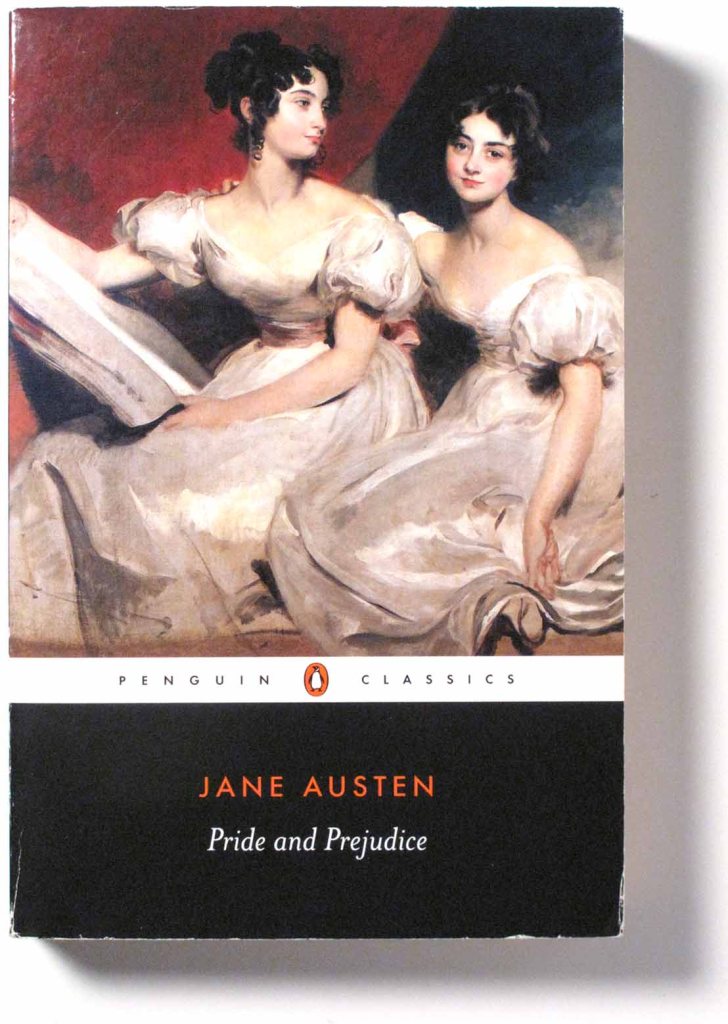
One of Penguin Classics’ notable series was published in the year of its new cover grid, 2003. The six Jane Austen novels were presented with portraits of women painted in the early 19th century and suggest the social background of the Regency era of her books. They capture the intimate, feminine world she described.
Sir Thomas Lawrence (see above) was one of the leading portrait painters of the Georgian and Regency eras (c1714-1830), in the company of Gainsborough, Reynolds and others. Like them he made a fortune portraying the London elite, though he managed to stay in debt for most of his life. Little is known of the sitters who are recorded as the niece and daughter of ‘Mr Fullerton of Tunbridge Wells’. They are lost to history but Lawrence ensured their beauty would live on.

This lovely portrait hides a double tragedy. It’s painter, Louis Eugène Lariviére, was a prodigy whose talent was recognized early. He came from a family of artists – his father, brother and grandfather were all painters. He and his brother were sent to study under the leading painter Girodet, a pupil of the great Jacques-Louis David. His future seemed bright.
His younger sister Eugénie-Paméla, painted here in 1820 at about sixteen, died tragically at twenty. The artist himself had died the year before, with neither sibling living to twenty-five. No cause is recorded. The sad story brings a deeper poignancy to the portrait, fitting for such a loving and delicate rendering.

The Countess of Oxford was a well known aristocrat and celebrity who achieved some notoriety from her affairs, chiefly with notable men from the Reform side of politics.
She frequently took lovers from among the pro-Reform party during her marriage, firstly Francis Burdett and most notably Lord Byron who was 14 years her junior. The affair lasted from 1812, in the aftermath of Byron’s affair with Lady Caroline Lamb, until 1813. She and her husband then went abroad but Byron did not, as she had hoped.
Her marriage was not a love match and her large number of children were known as the “Harleian Miscellany” due to uncertainties over whether her husband was their father, but the marriage endured. Even in the easy-going world of the Regency aristocracy, her affairs were considered to have put her beyond the pale, and few people were prepared to receive her or call on her. Wikipedia
John Hoppner (1758-1810) was a portraitist of the high establishment, painting the Prince of Wales, Joseph Haydn, Lord Nelson amongst others.
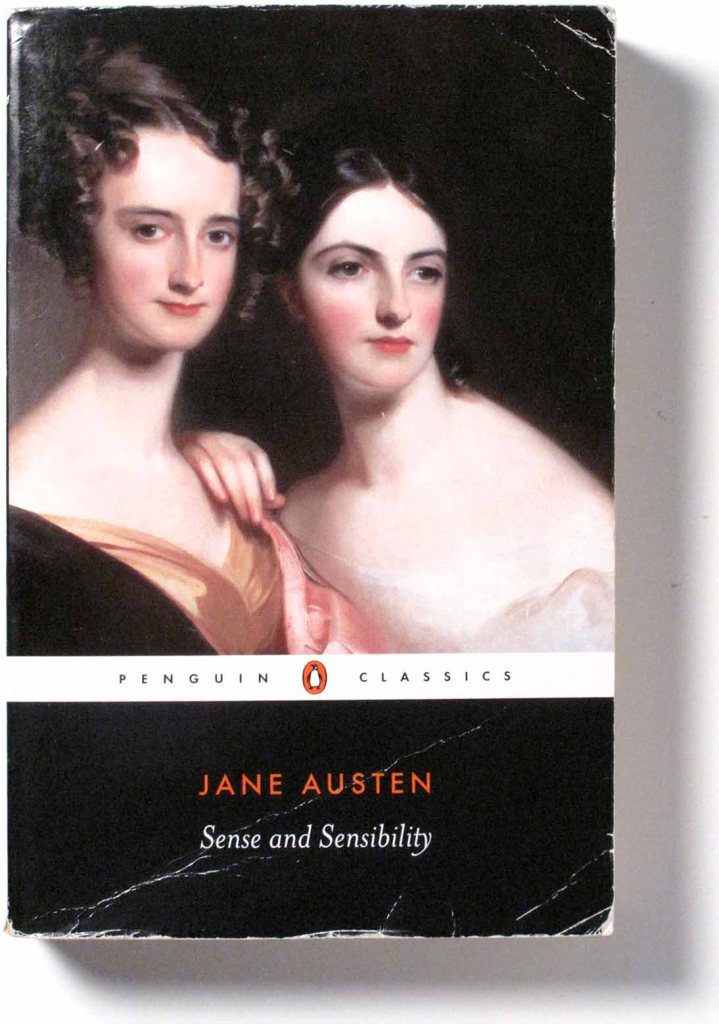
No record exists of the MacIlvane sisters but they might have been wealthy Philadelphians since that is where the artist Thomas Sully lived. He was born in England to a theatrical family who migrated to the U.S. when he was five and lived there for the remainder of his 89 year life. He studied in England under the famous expatriate American painter, Benjamin West and was befriended by the society portraitist Thomas Lawrence and was later known as the “American Lawrence” for the similarity of their approaches. He painted three U.S presidents and one English queen – Victoria.
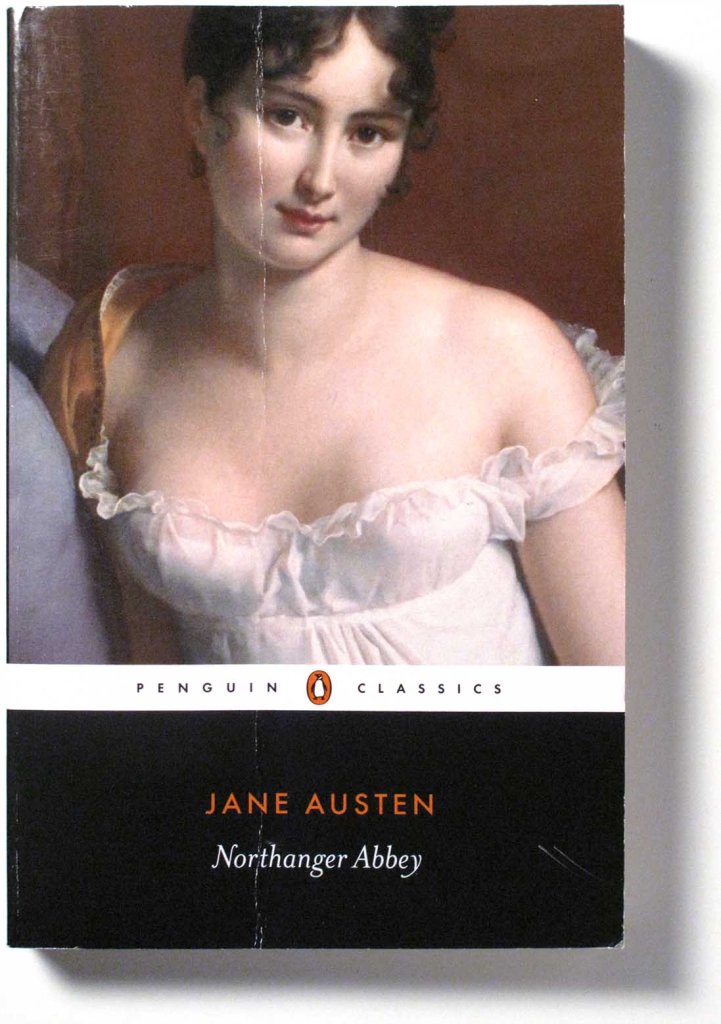
This is the same Madame Récamier that Jacques-Louis David famously painted in 1800. Juliette Récamier was a French socialite and saloniste married at fifteen to a forty-five year old banker. Her extraordinary life story as told on Wikipedia is well worth reading. Suffice to say she was not just a pretty face. Not liking David’s Neo-Classical portrait because of its coldness she commissioned his pupil Simon to paint her in a warmer – hotter – pose. Hearing of this, David refused to finish his version.

Thomas Sully was commissioned to paint portraits of Philadelphia doctor Joseph Klapp and his wife Anna. These were completed in 1814, nine years after their marriage. The companion portrait depicts Joseph Klapp in contemplation. Together the portraits “present an image of a sophisticated couple that celebrates their prosperity, intelligence, and taste.” Well, all of these high society portraits do that, regardless of the truth.
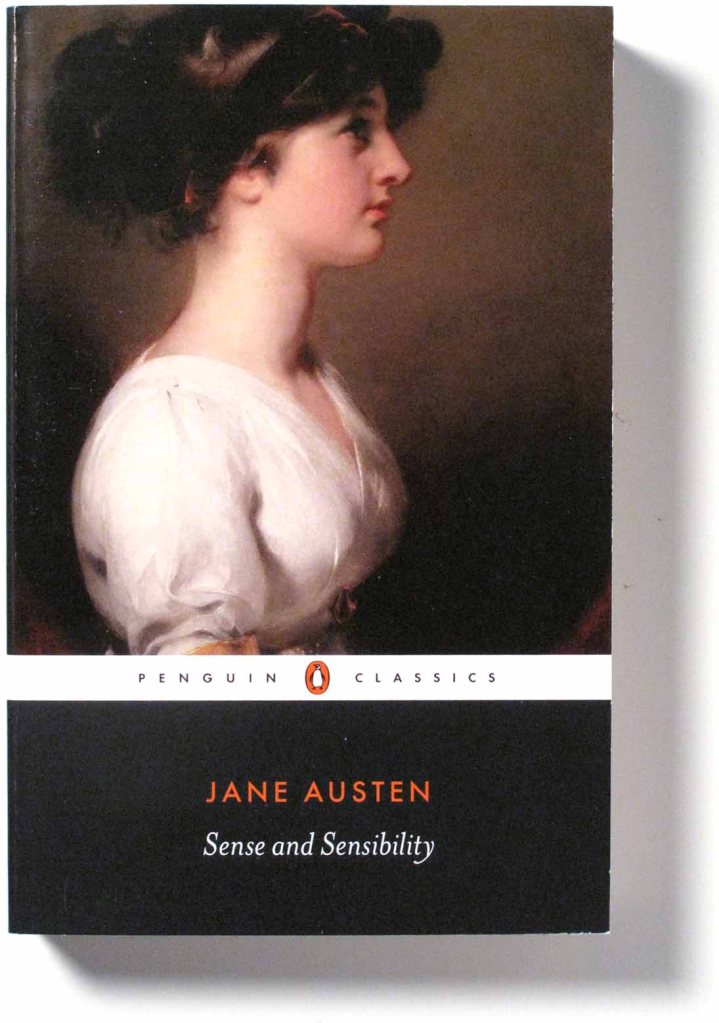
Caroline Upton’s title, “Honorable” identifies her as the daughter of a baron. Her dress, hairstyle, and gold armband are classical in style, and the full painting’s oval profile format—unusual in Lawrence’s work—recalls an antique cameo or medal.

The subject of this painting is unknown to history, a pity since she looks like she might have a story to tell. The artist William Beechey has played on the striking contrast of red and black, emphasizing her red lips and cheeks. It matches the colours of the cover grid. In this cover Penguin has reversed the painting left-to-right, in the original she looks at us from the righthand side.
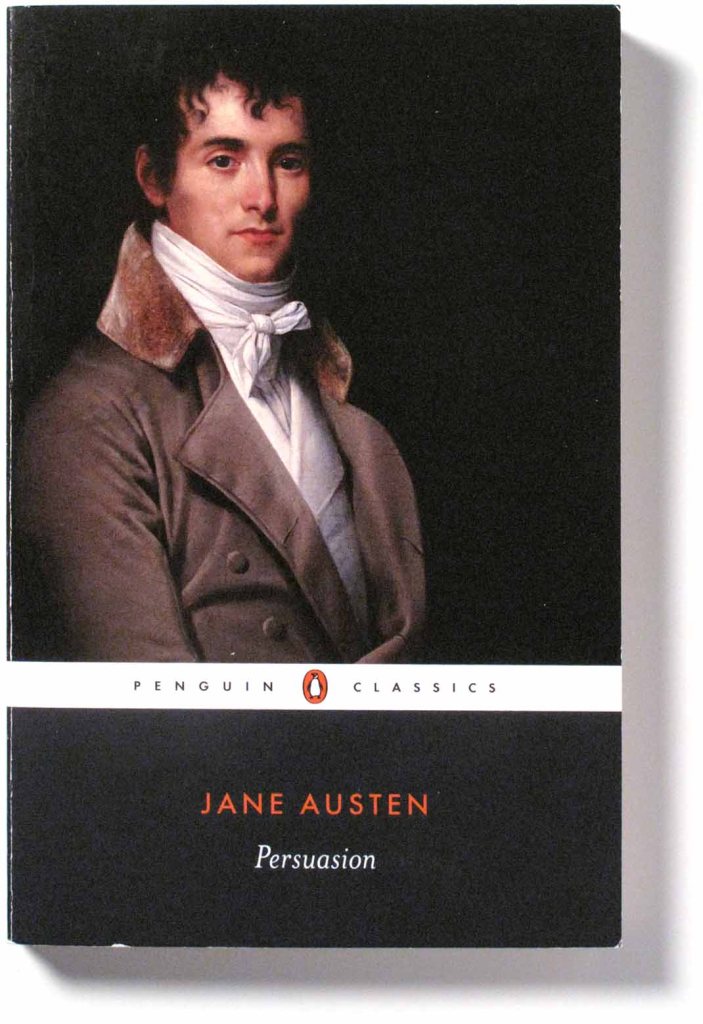
In this one cover, Penguin has chosen a man. Why? Moreover, the image is again reversed from the original painting. Is it because in the correct position, the sitter is too dominant for a book cover? The artist Robert Lefevre has depicted his subject as a Byronic figure. He is Pierre Guérin, himself an artist known for his Neo-Classical history paintings, and also for being a teacher of Delacroix and Gericault. now more famous than him.

 PENGUIN SERIES DESIGN