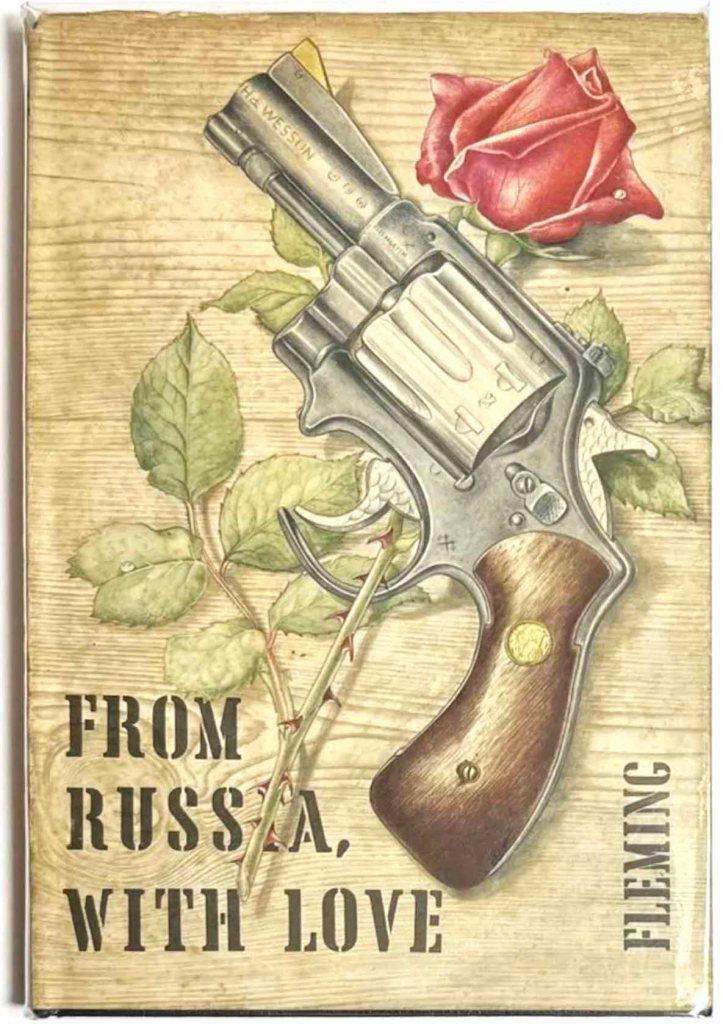
In the 1960s it became a fashion to design the covers of spy novels with still lifes featuring hand guns.
The illustrator Richard Chopping may have started this trend with his covers for the James Bond hardcovers. Chopping was an English illustrator who specialized in natural history subjects, he was known for his trompe l’oeil technique. Ian Fleming’s wife Anne recommended him to her husband, to lift the standard of his covers and he ultimately produced ten. These distinctive editions are now highly sought after with a mint copy of the above title going for US$37,000. Shown below is the final cover by Chopping.
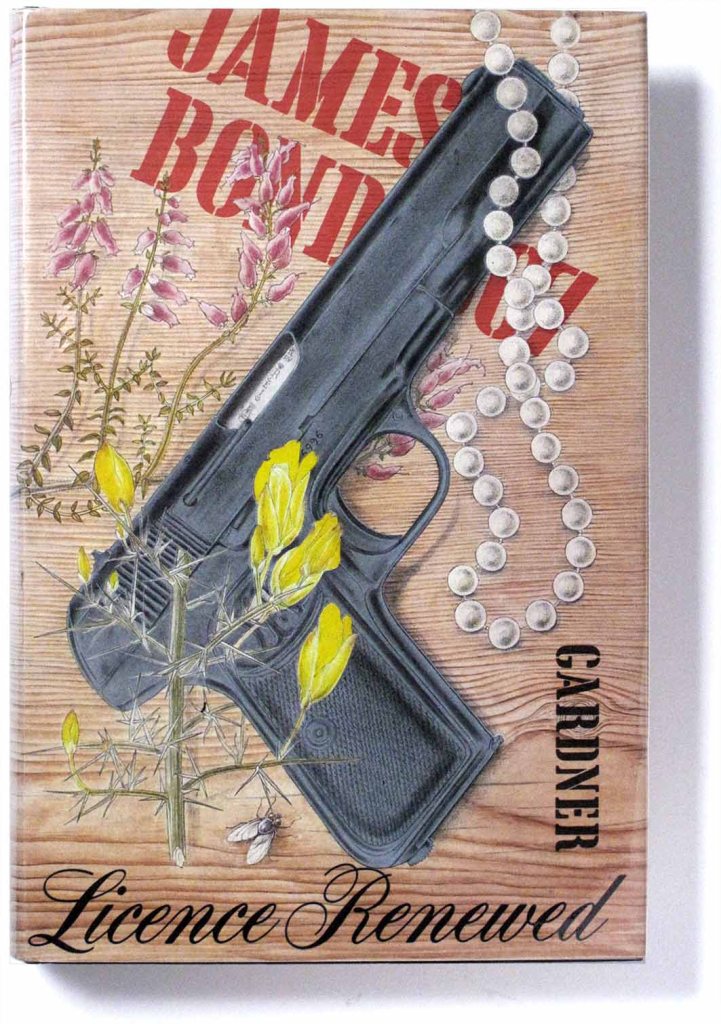
The genre of spy fiction, which goes back more than a century to Joseph Conrad, Somerset Maugham and Erskine Childers, was given a boost by the enormous success of Fleming’s James Bond novels. It encouraged others to try their hand. One such was Len Deighton who wrote a series of “kitchen sink” spy novels in the 1960s that portrayed a seedy bureaucratic world of espionage, more realistic but less glamorous than the Bonds.
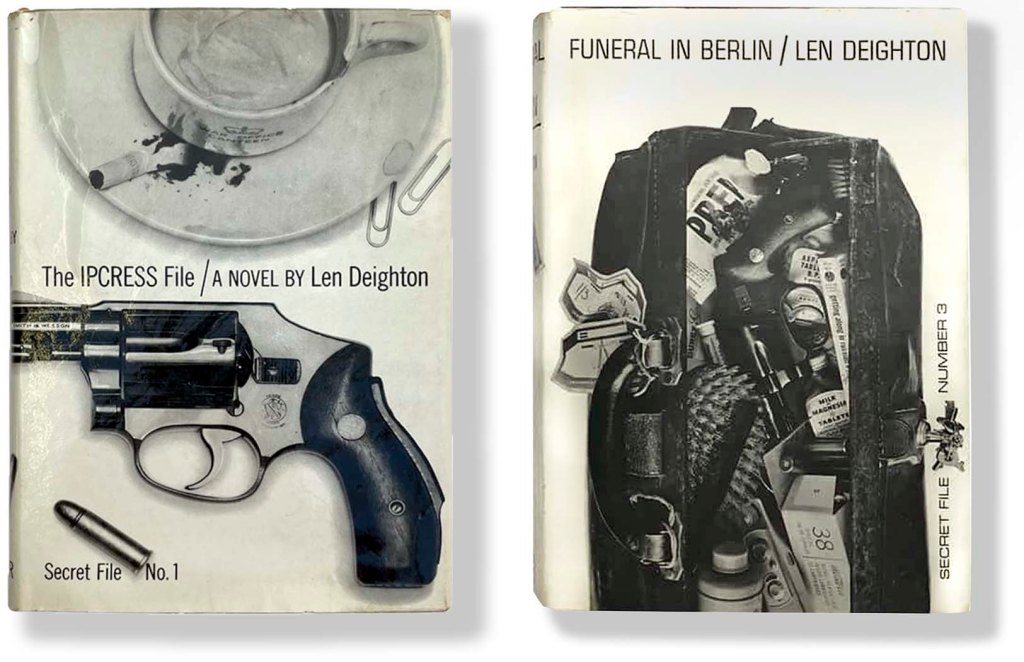
Deighton insisted that his friend, Raymond Hawkey be the cover designer. His first Deighton covers were black & white photographs that showed the ordinariness of the spy’s life, stained department coffee cups, cigarette stubs and paper clips as well as the all important revolver. These covers set a trend and many spy novels featured photographic still lifes with the paraphenalia of office life.
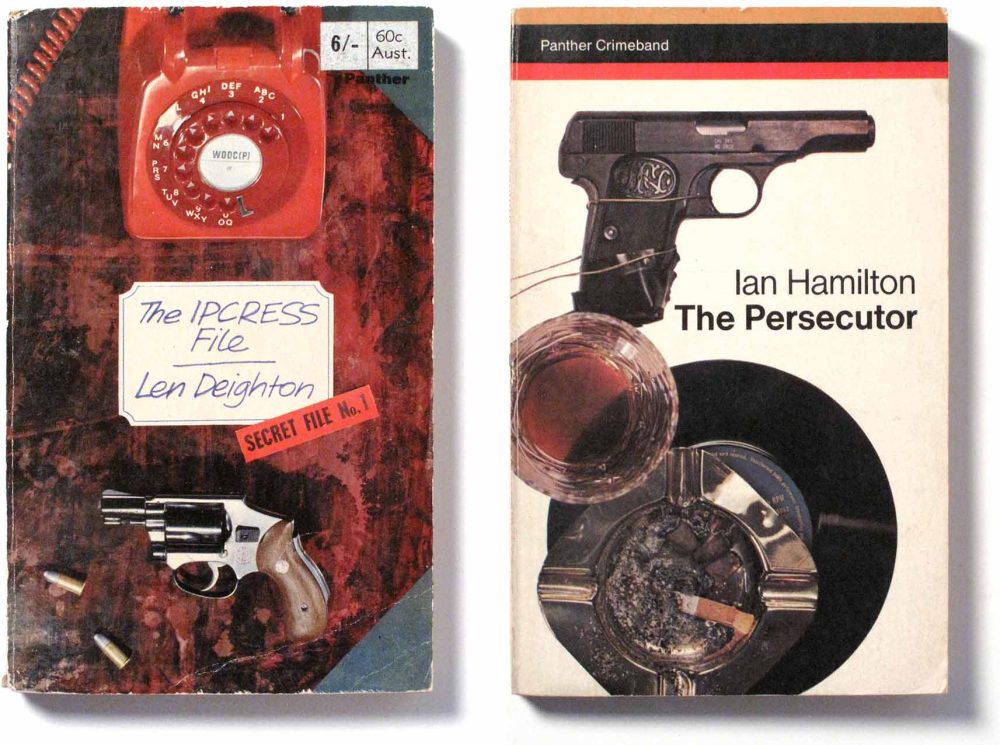
The gun trend applied to hard covers as well as paperbacks. The next two examples show rather untidy still lifes that nevertheless convey the complexity of the plots and the confusing worlds they describe.
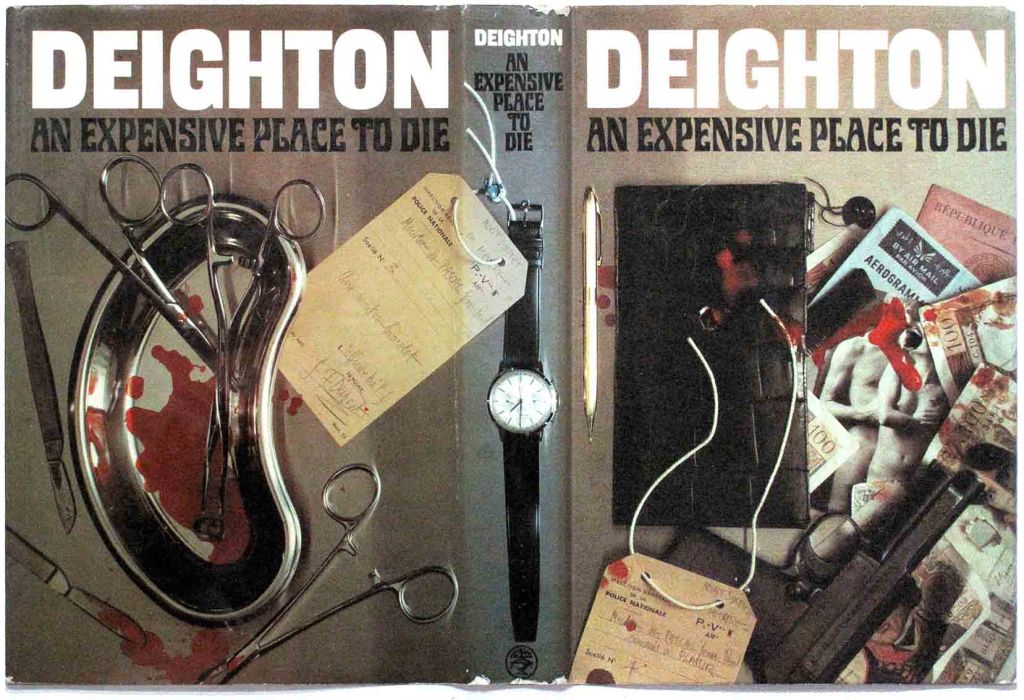
Hawkey designed the layout in a very different style to his IPCRESS File cover of only five years earlier.
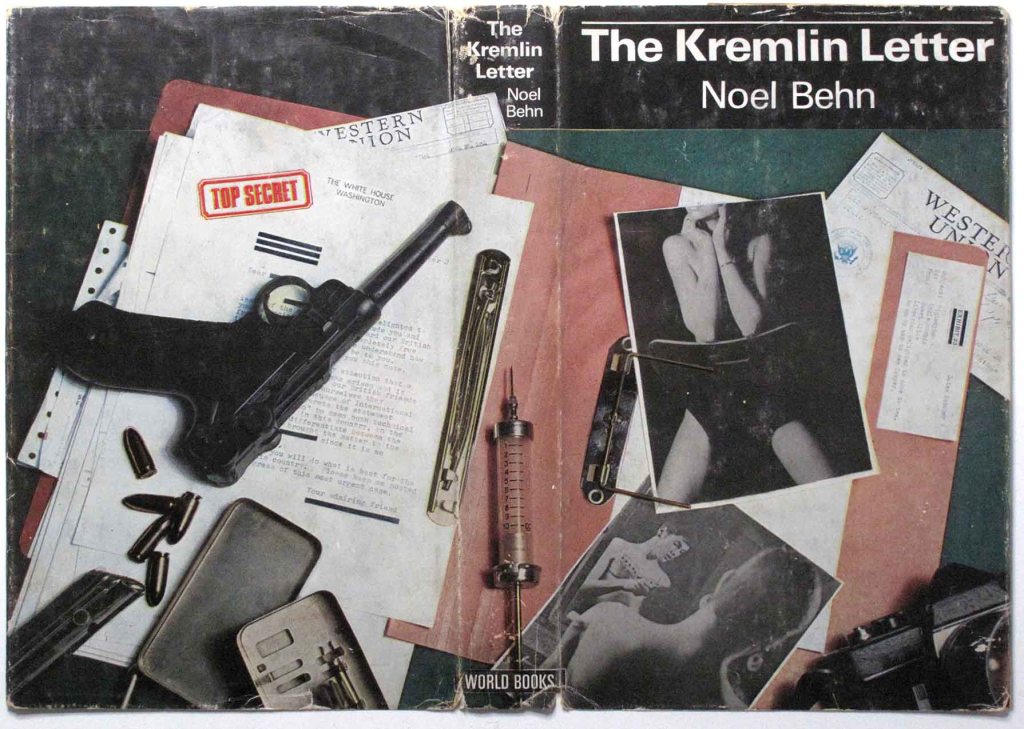
The conception of the still life seems to owe something to the cover of Deighton’s An Expensive Place to Die, with its jumble of documents, gun and revealing nude photographs. Lewis Morley was a London photographer best known for his stylish nude of Christine Keeler, she of the Profumo Affair, astride an Arne Jacobson chair in 1963. .
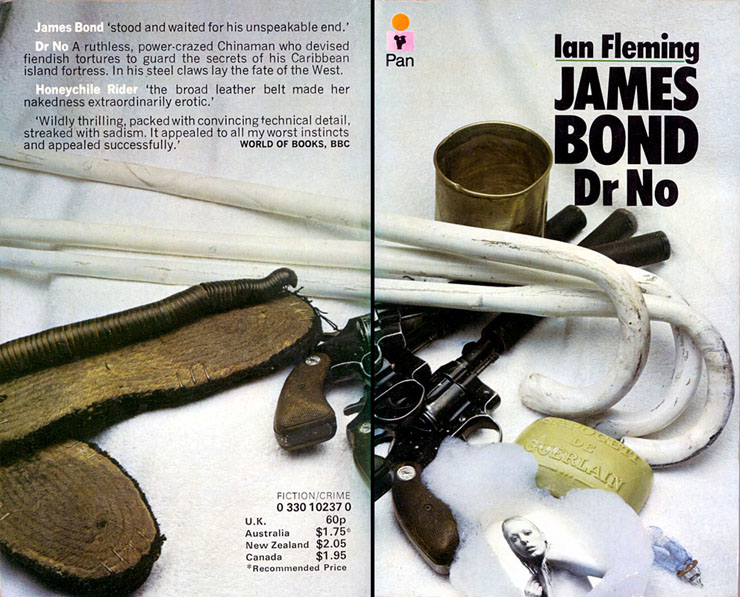
Following the enormous success of the 1960s Pan Books designed by Raymond Hawkey, the publisher re-released the James Bonds in gaudy, too-literal photographic covers. The props are not well co-ordinated. Mercifully, no designer or photographer was given credit.
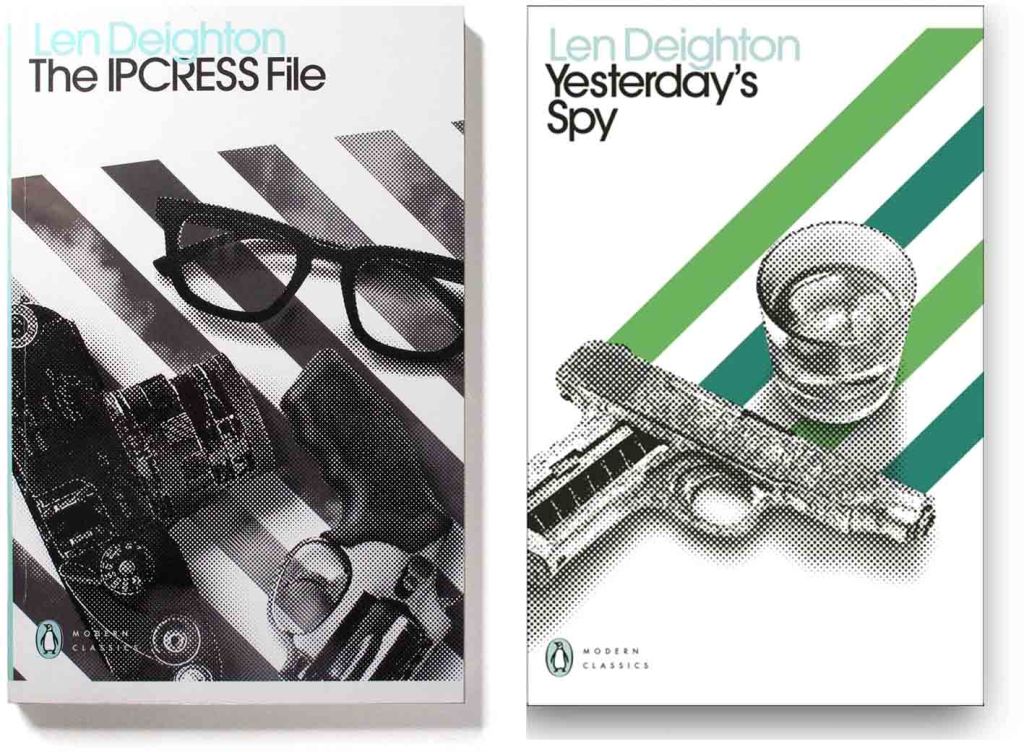
Finally, in the early 2020s a large set of Len Deighton books were issued by Penguin in new covers designed and art directed by Jim Stoddart. These stylish paperbacks gather together the iconography of the sixties covers and pay hommage to the man who started all these gun covers, Raymond Hawkey.

 PENGUIN SERIES DESIGN