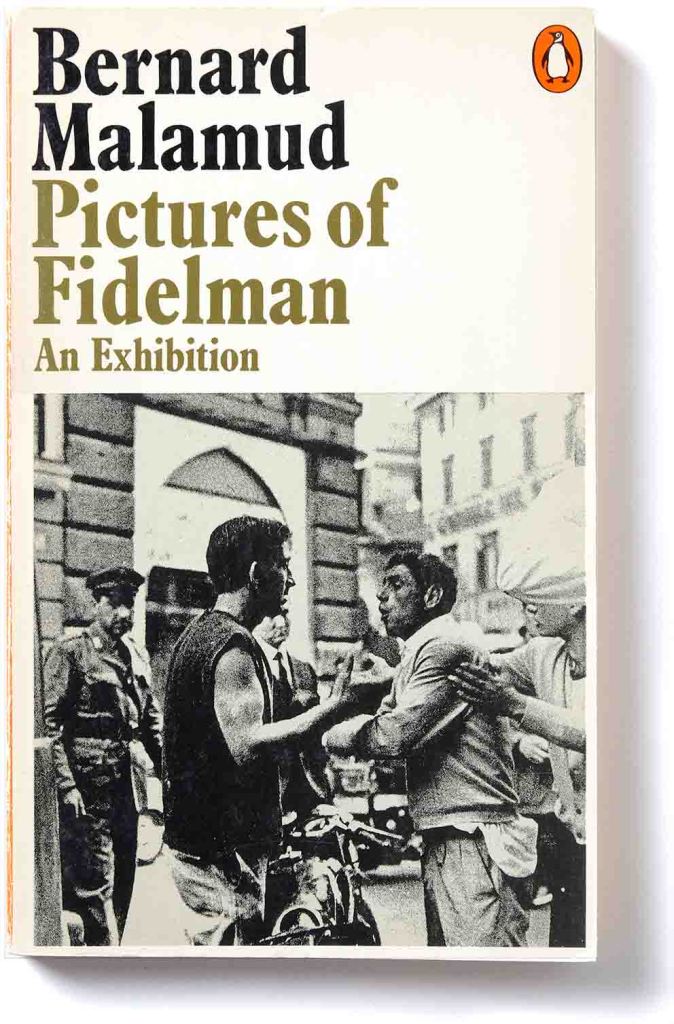
In 1967 the New York Jewish writer Bernard Malamud won both the Pulitzer Prize and the National Book Award for his novel The Fixer. Malamud “was renowned for his short stories, often oblique allegories set in a dreamlike urban ghetto of immigrant Jews”.
Penguin published a small series of Malamud books, of which these four have the most cohesive covers. They feature photographs of street life suggesting the world depicted in the books.
The cover photograph is by Enzo Ragazzini, born 1934 in Rome. He is mainly remembered for his pioneering work in Op Art with experimental photographic techniques. He was also a professional photographer who often worked on the street.
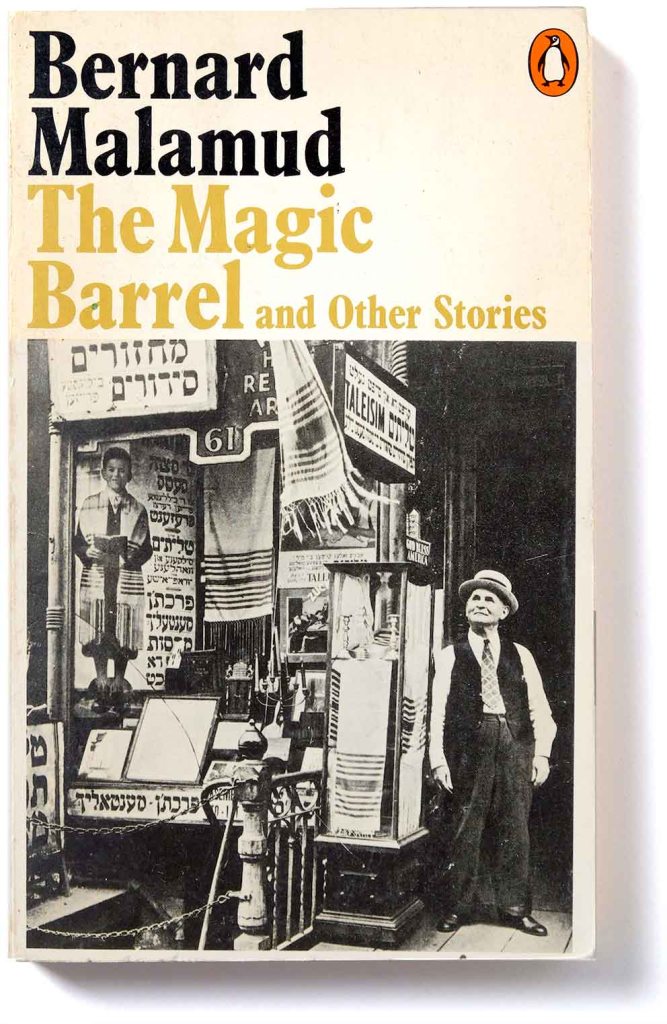
The Magic Barrel is a collection of short stories that won Malamud a National Book Award in 1959. The Assistant is a novel set in a failing grocery store. It was a finalist for the National Book Award.
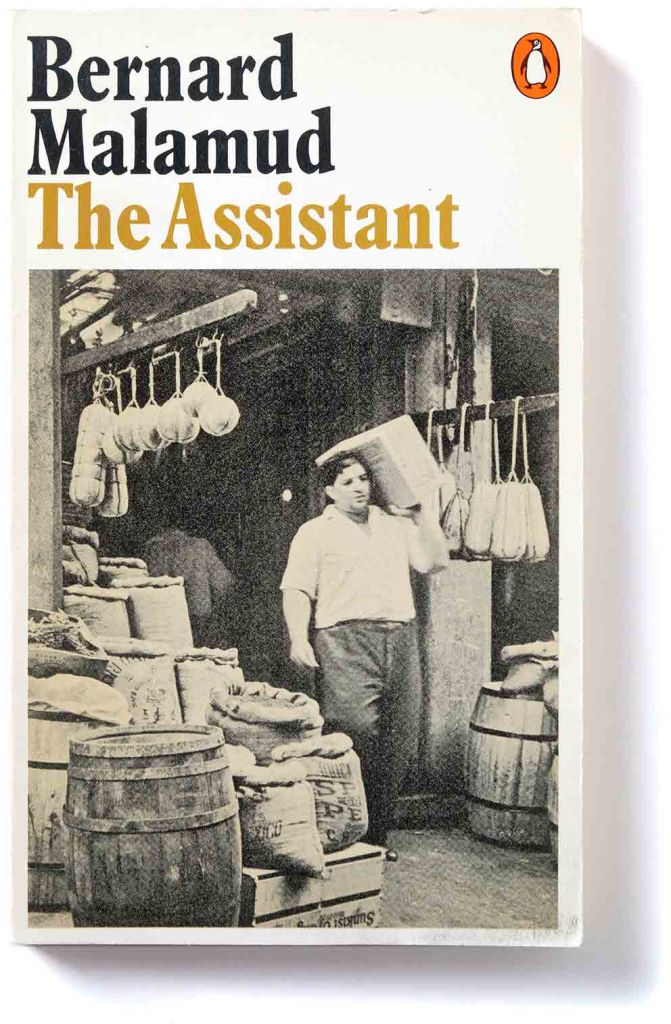
The cover photographs are by Andreas Feininger, 1906 – 1999, whose father, the artist Lyonel Feininger, taught at the Bauhaus. Andreas studied there before becoming a photographer and he later became a staff photographer at LIFE Magazine, from 1943 to 1962. He became one of the best known photographers in the world for his many influential books and exhibitions.
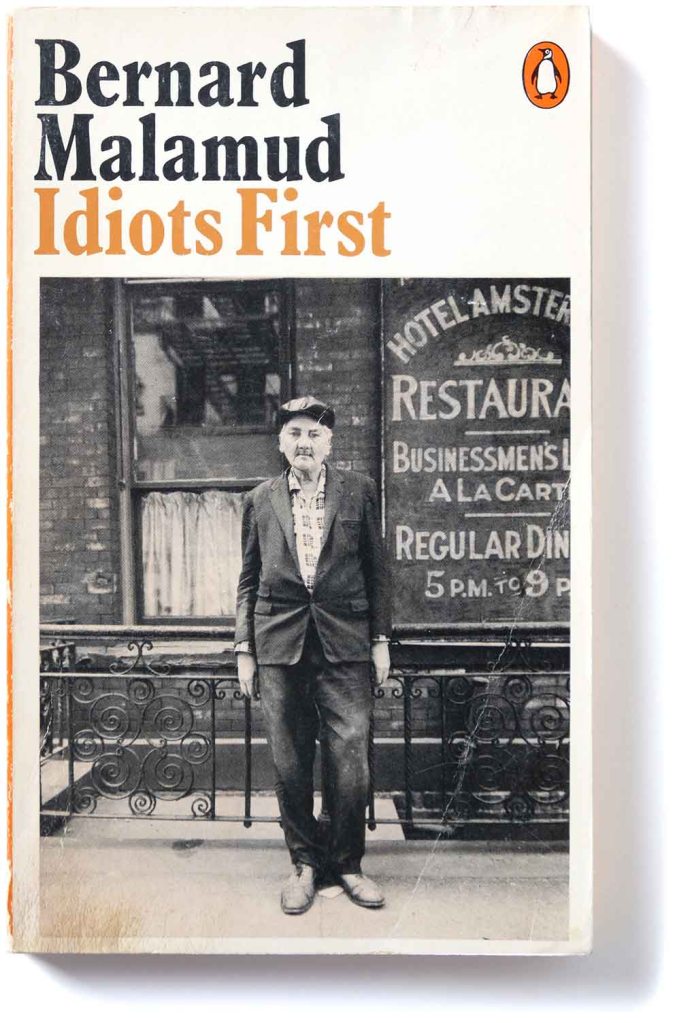
Idiots First is a collection of short stories. The photograph is a posed portrait taken on Lower Lexington Avenue, Manhattan, near the Bowery. The subject appears to be a down-on-his-luck local, but is that any reason to attach him to the word ‘idiot’ from the book’s title? This is a failure of taste by the art director and you can only imagine what the photographer thought of it.
Evelyn Hofer, 1922-2009, was “the most famous unknown photographer in America”. She favoured carefully composed scenes with a still, timeless aura. She sought an “inside value, some interior respect” in the subjects she photographed. Her reputation as a photographer is currently going through a re-assessment and her photographs and books are now being seen as major cultural artefacts.

 PENGUIN SERIES DESIGN
You raise a very pertinent issue here Greg, on the use of photography in relation to text. Here the text as title plays the dominant role, not just as a caption or subtext, and so forces an interpretation of the photograph. I must find out more about Enzo Ragazzini, so thank you for the link!
LikeLike