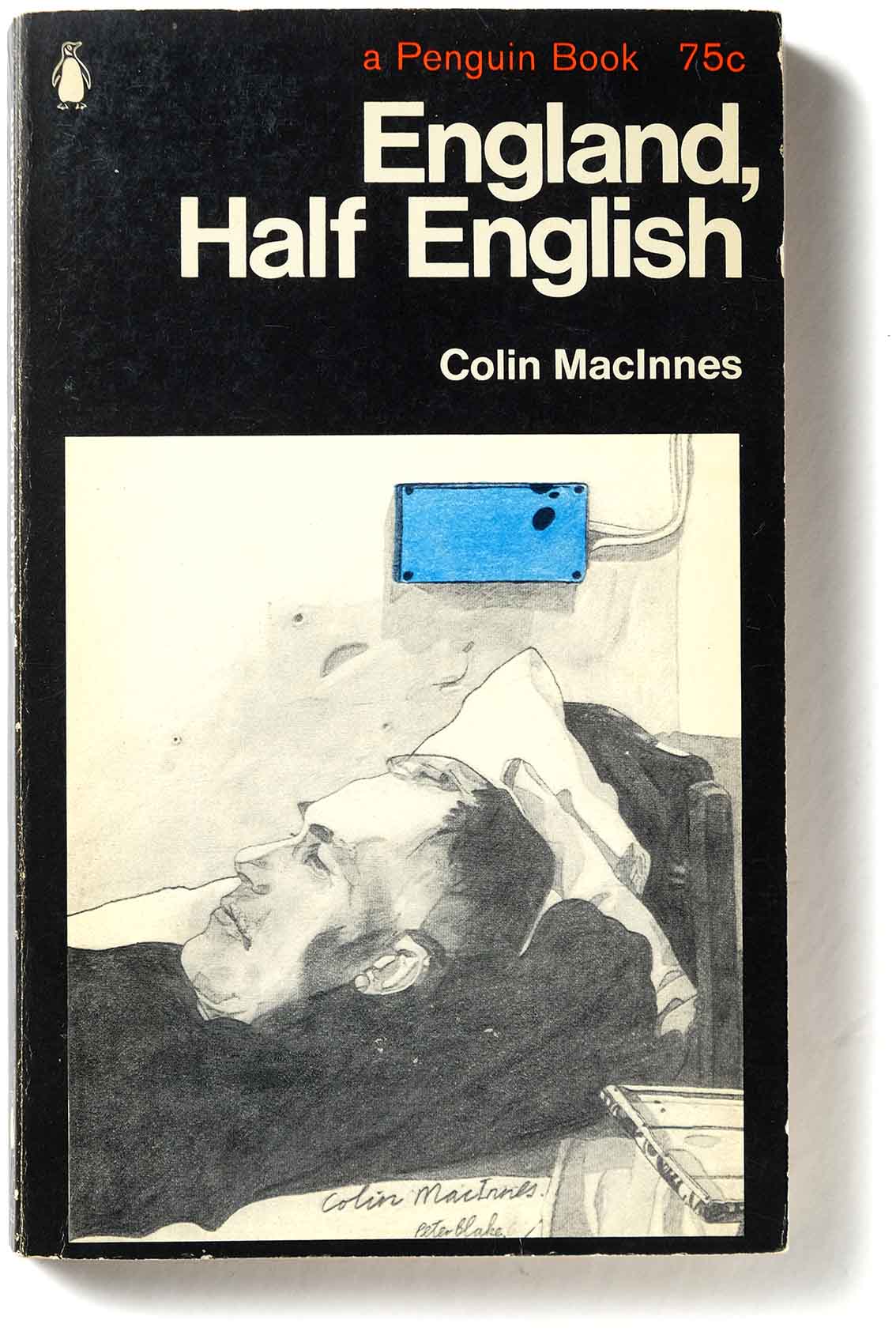
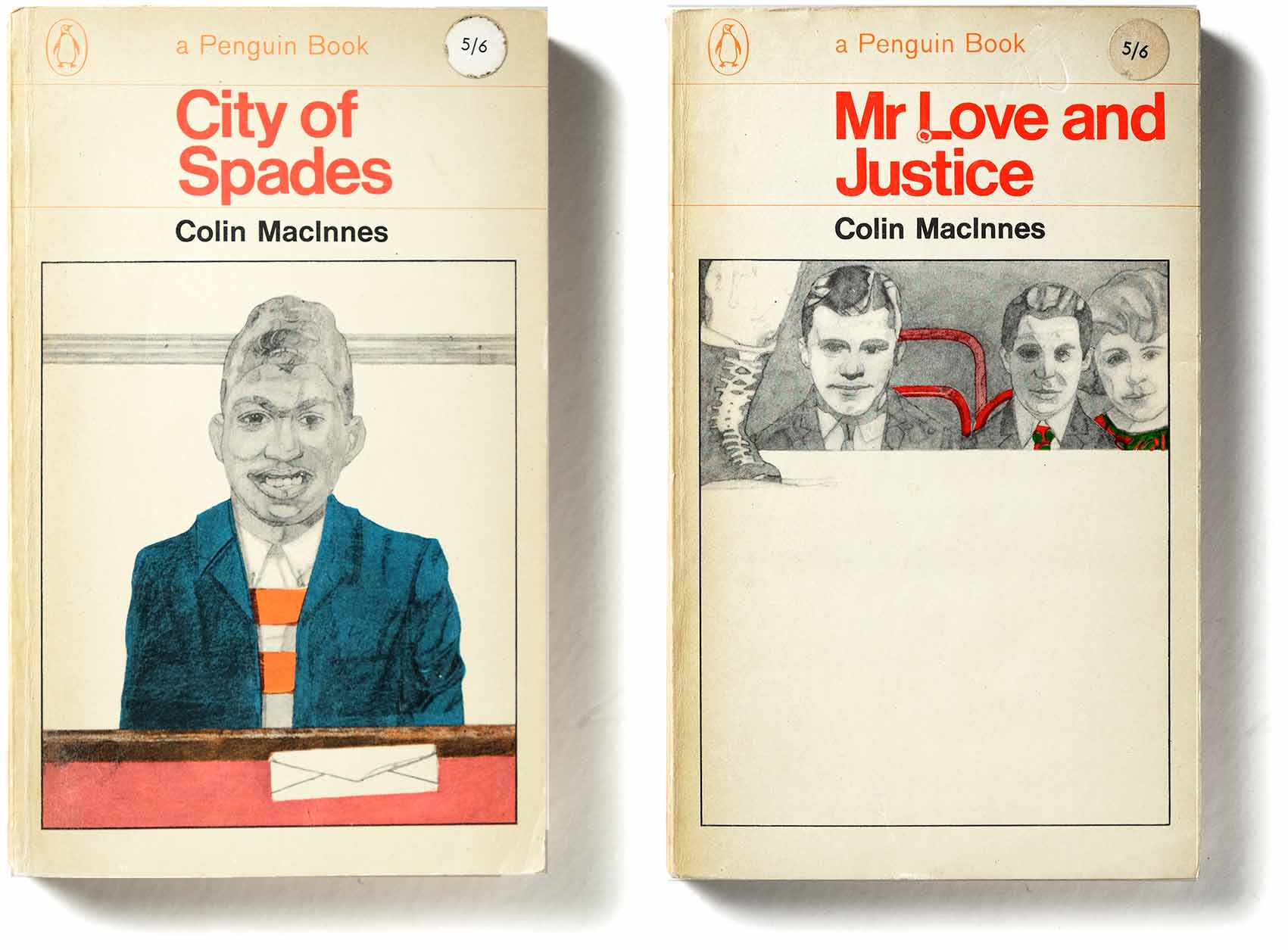
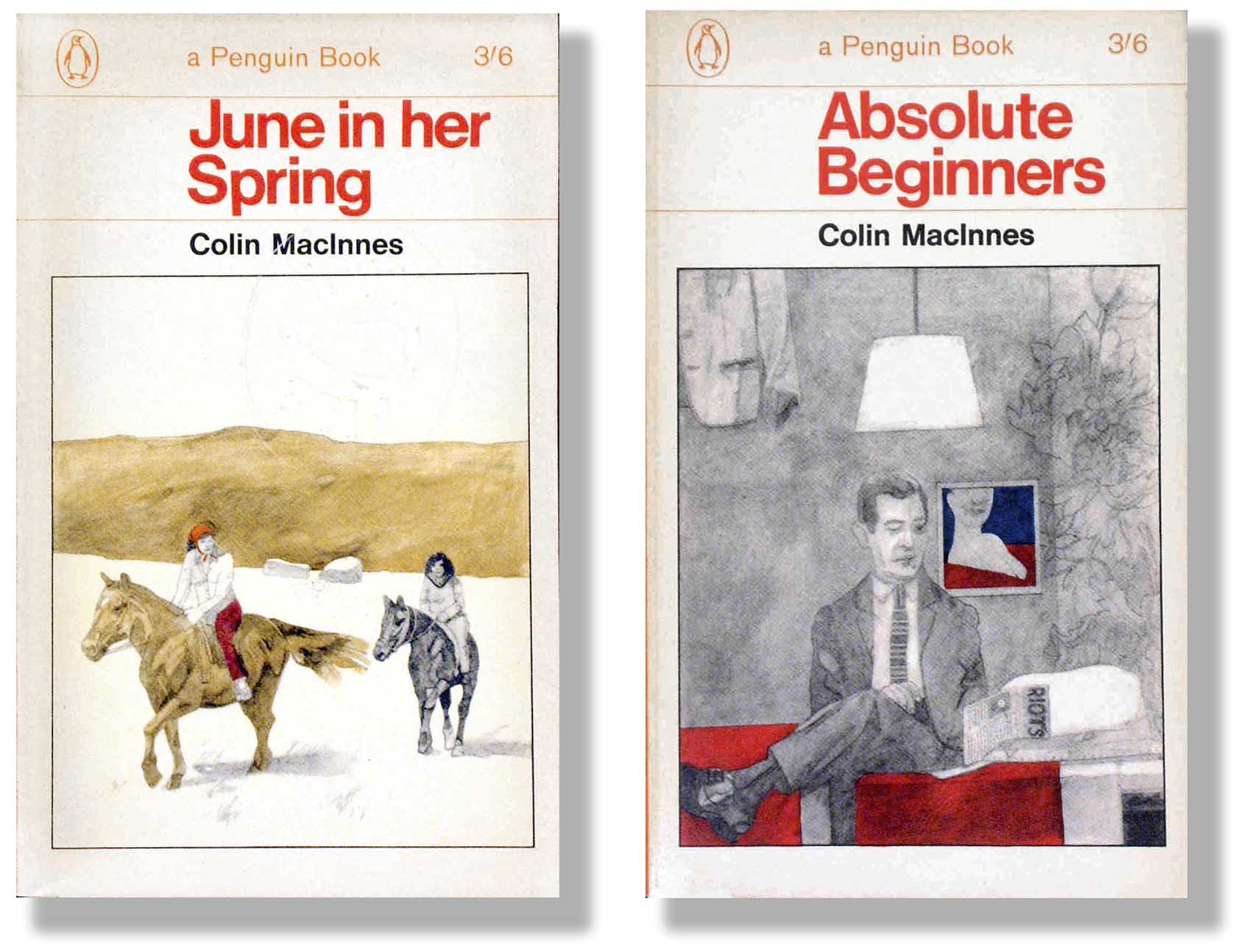
These mid-sixties covers were drawn by the English pop artist Peter Blake. They were an assignment for a small series of novels by Colin MacInnes who was a prominent writer in the 1950s and 60s.
The combination of Blake and MacInnes was a good one because both the artist and the writer focussed their attention on the contemporary scene in Britain which was then going through a social transformation: the rising consumer society, popular culture, teenage rebellion and the great cultural explosion of the Swinging Sixties.
Blake embraced both the democratic nature of popular culture and the refined character of fine art. He had studied commercial art Gravesend Art School before moving on to the Royal College of Art in London. The combination defined him as an artist.
Unlike many of today’s star artists he is still happy to accept commissions and makes versions of his work for sale at affordable prices. This democratic spirit, combined with the accessibility of his work, gives a new and positive meaning to commercial art. Jim Northover.com
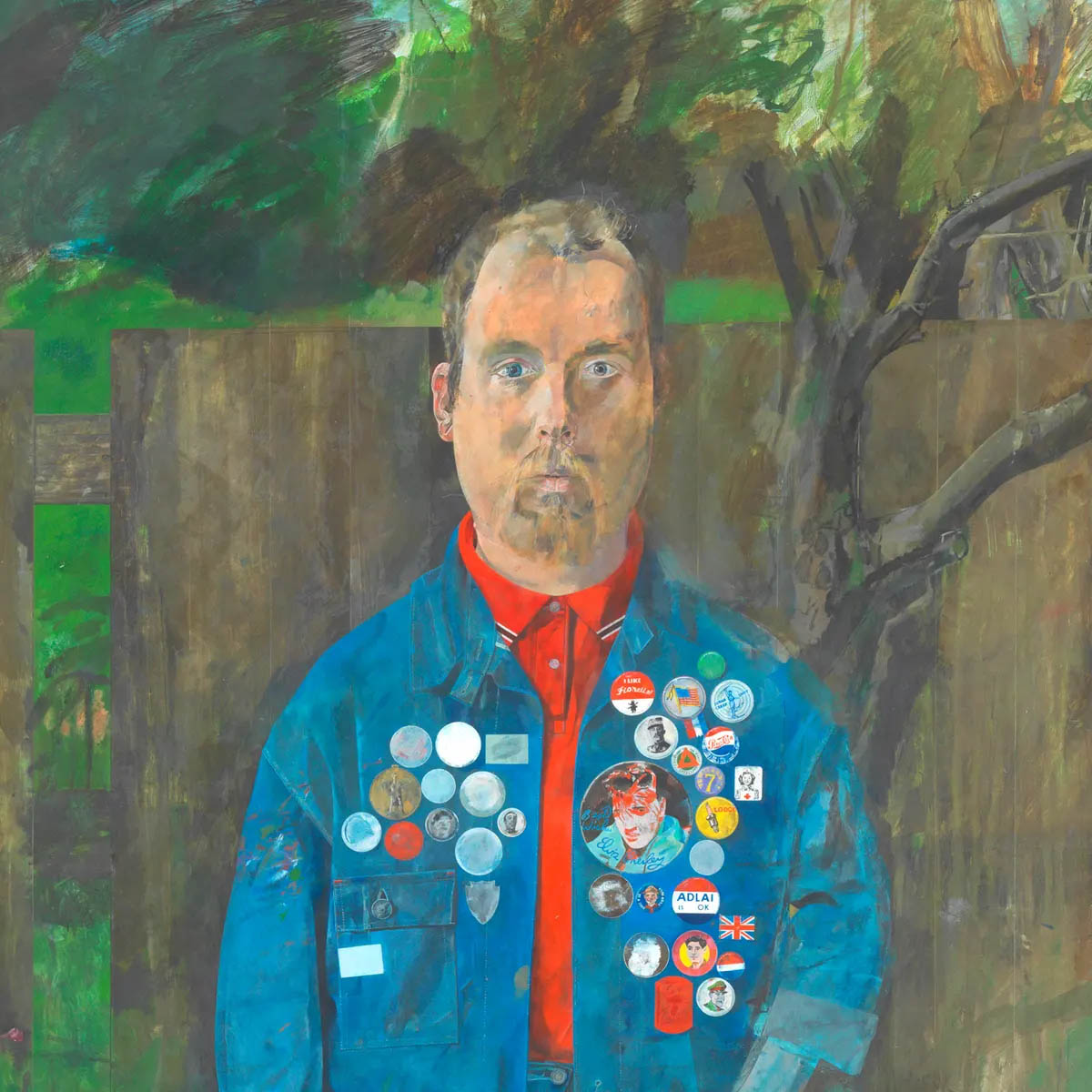
Blake’s embrace of popular culture can be seen in this purposeful self-portrait from 1961. He displays his collection of badges and buttons, icons of Elvis Presley, Pepsi Cola, the Union Jack etc, all mixed together and equal. It is a statement of his identity as an artist who straddles the two worlds of high and low culture.
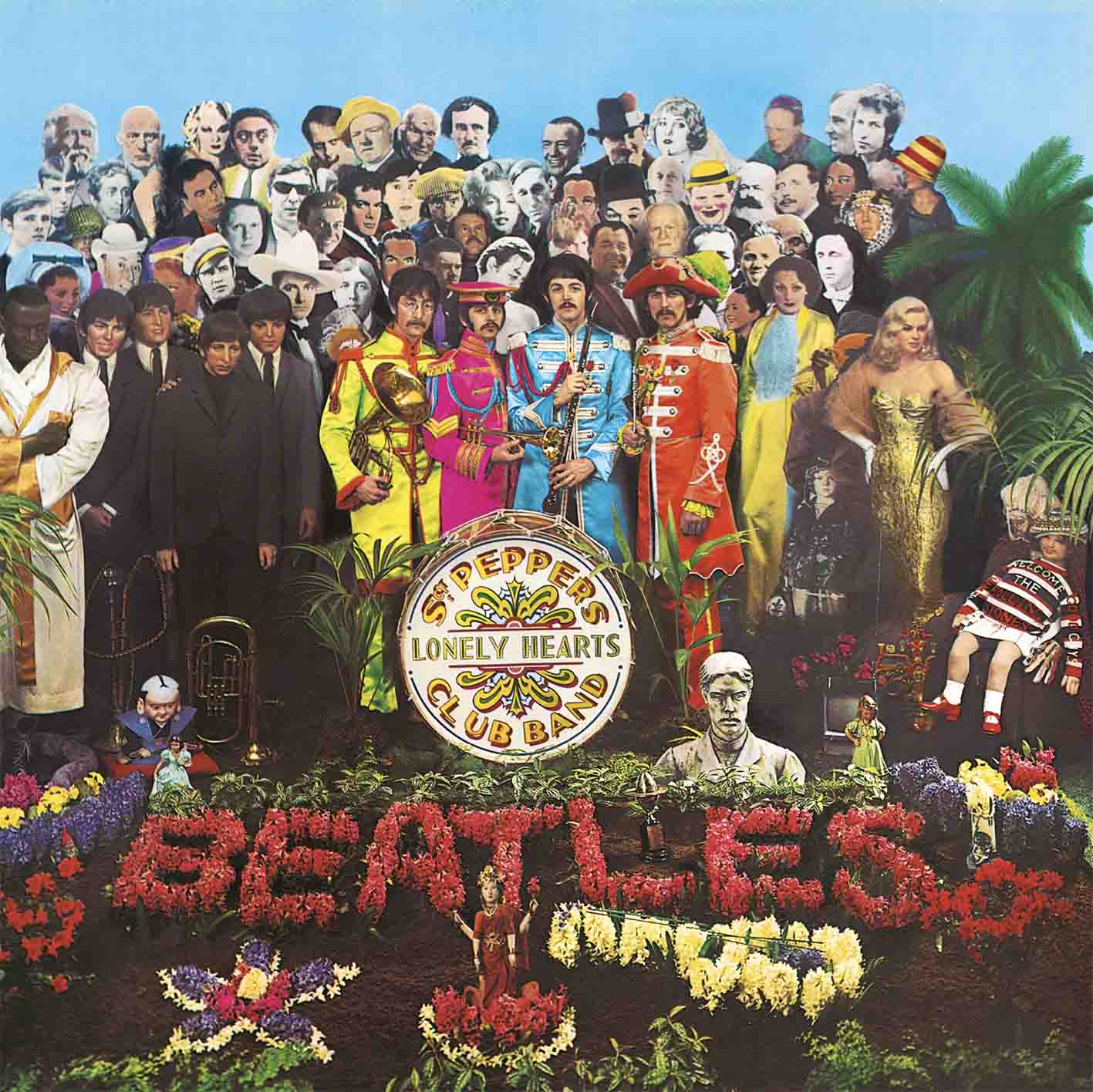
Blake’s most famous creation was his cover of The Beatles 1967 album, Sgt Pepper’s Lonely Hearts Club Band. He produced the artwork with his wife, the American artist Jann Haworth. They were paid £60, roughly equivalent to £1000 today. Considering the amount of effort required, and the commercial success of any new Beatles album, it’s unlikely that a well-established artist/designer would consider such a low fee today. The album cover was a game-changer. While there had been good cover designs before, Sgt Pepper’s baroque complexity and colourful exuberance was a new step. It would be a conversation piece for years to come.
Blake’s artistic career gathered pace in the fifties and sixties, bringing him in line with the British pop art movement with David Hockney, Richard Hamilton, and so on as contemporaries. His work is known for its bright colors, strong imagery, and original use of found objects. As part of the pop art movement, Blake’s work was characterized by a harmony of nostalgia and popular icons. Singulart.com


The studied, but understated dead-pan quality, and charged, subdued emotion, of these covers and Blake’s self-portrait is striking…something very cool, and very sixties!
LikeLike