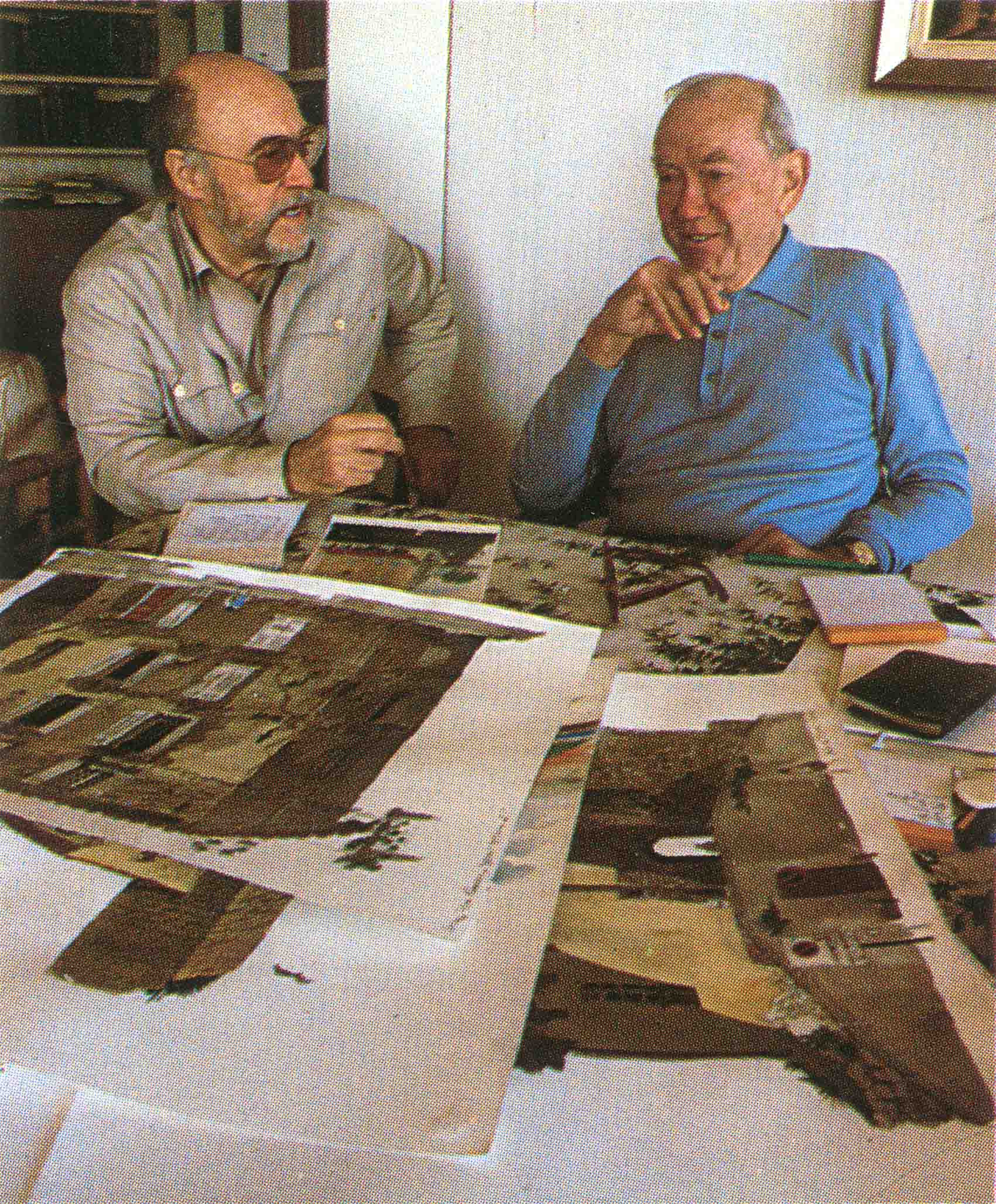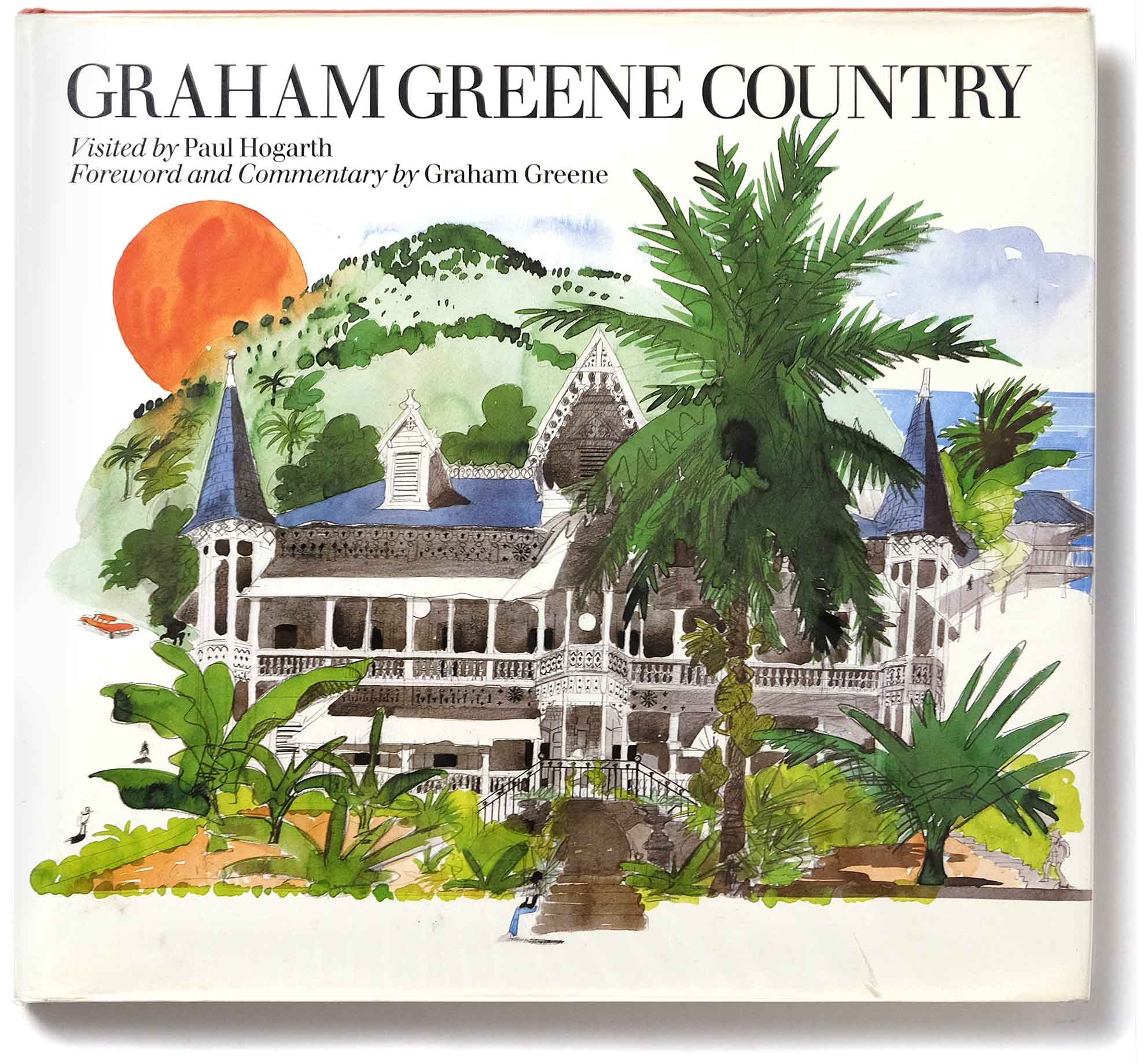
In 1986 Pavilion Books published Graham Greene Country, “a telling and atmospheric evocation of Graham Greene Country, a unique creative collaboration between artist and author.” Greene’s novels are marked by a powerful sense of place and he travelled widely when writing them: Zaire for A Burnt-Out Case, Haiti for The Comedians, Vietnam for The Quiet American.
The artist Paul Hogarth travelled the world visiting locations of Greene’s novels, recording his impressions in watercolour and text. He is the artist most associated with Greene having illustrated his 1960s and 70s covers for Penguin, the subject of my previous post. Locations from twenty-four of Greene’s books were visited by Hogarth where he sketched, painted and diarised about what he saw, “I was involved with a year-long odyssey of 50,000 miles, encompassing four continents, over twenty countries and some fifty towns and cities”.
The resulting book contains Hogarth’s paintings and sketches, his extensive diary notes, a synopsis of each novel, quotations from Greene’s novels and some later comments about his memories of writing. All this expertly laid-out by David Driver. It is a substantial publishing achievement.
//
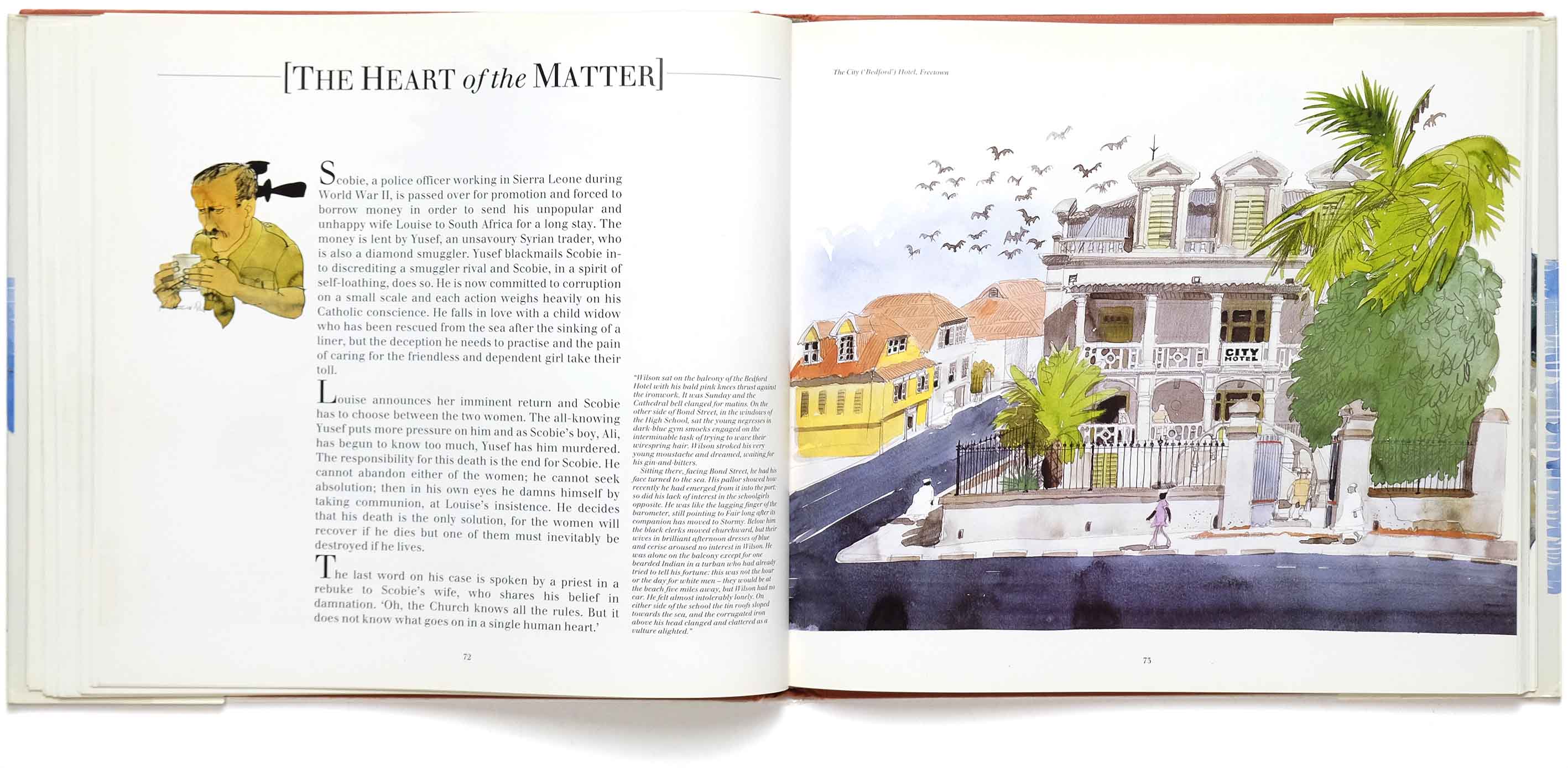
‘Scobie, a police officer working in Sierra Leone during World War II, is passed over for promotion and forced to borrow money in order to send his unpopular and unhappy wife Louise to South Africa for a long stay.’ From synopsis
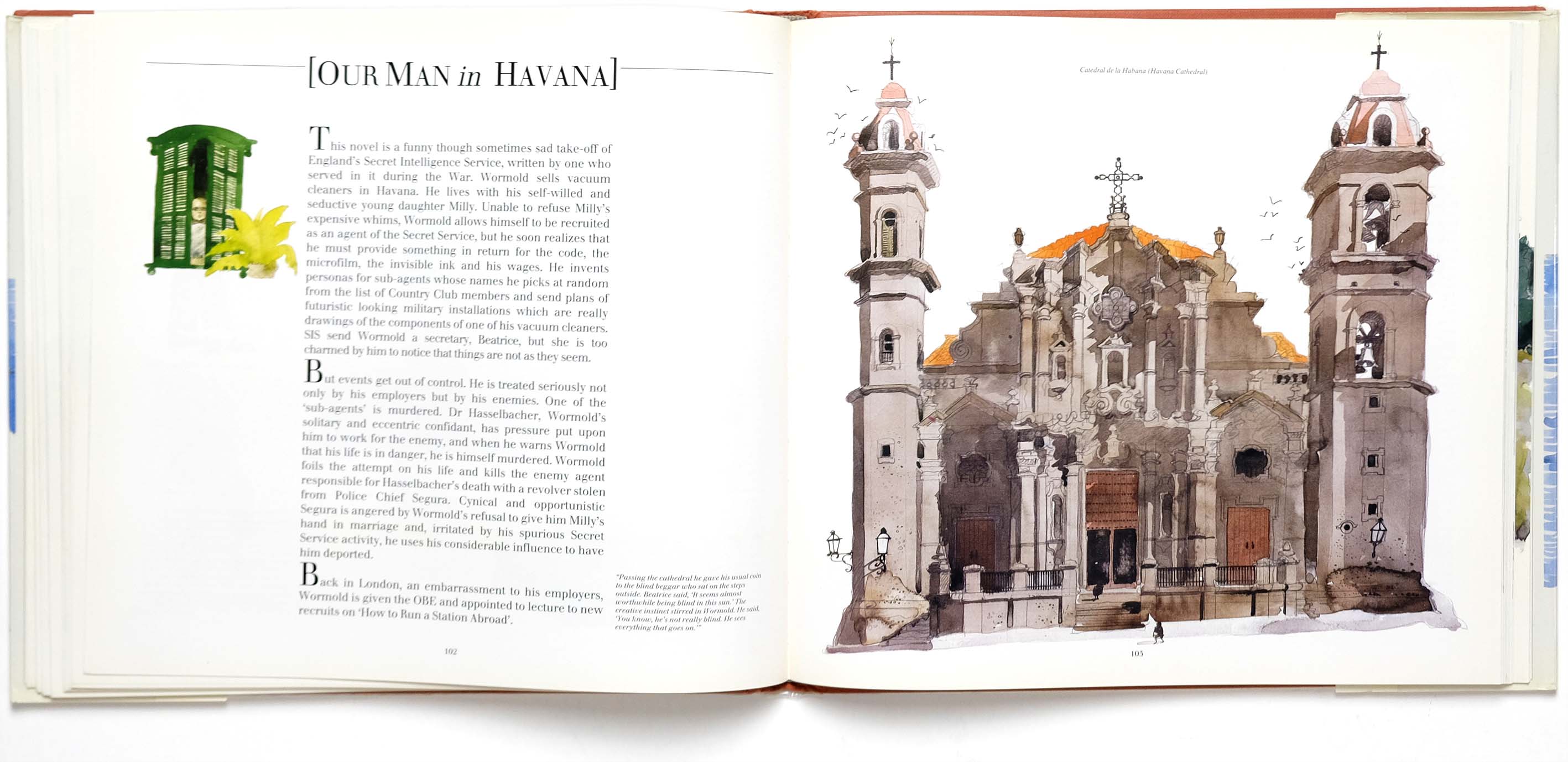
‘Wormold sells vacuum cleaners in Havana. He lives with his self-willed and seductive young daughter Milly. Unable to refuse Milly’s expensive whims, Wormold allows himself to be recruited as an agent for the Secret Service.’ From synopsis
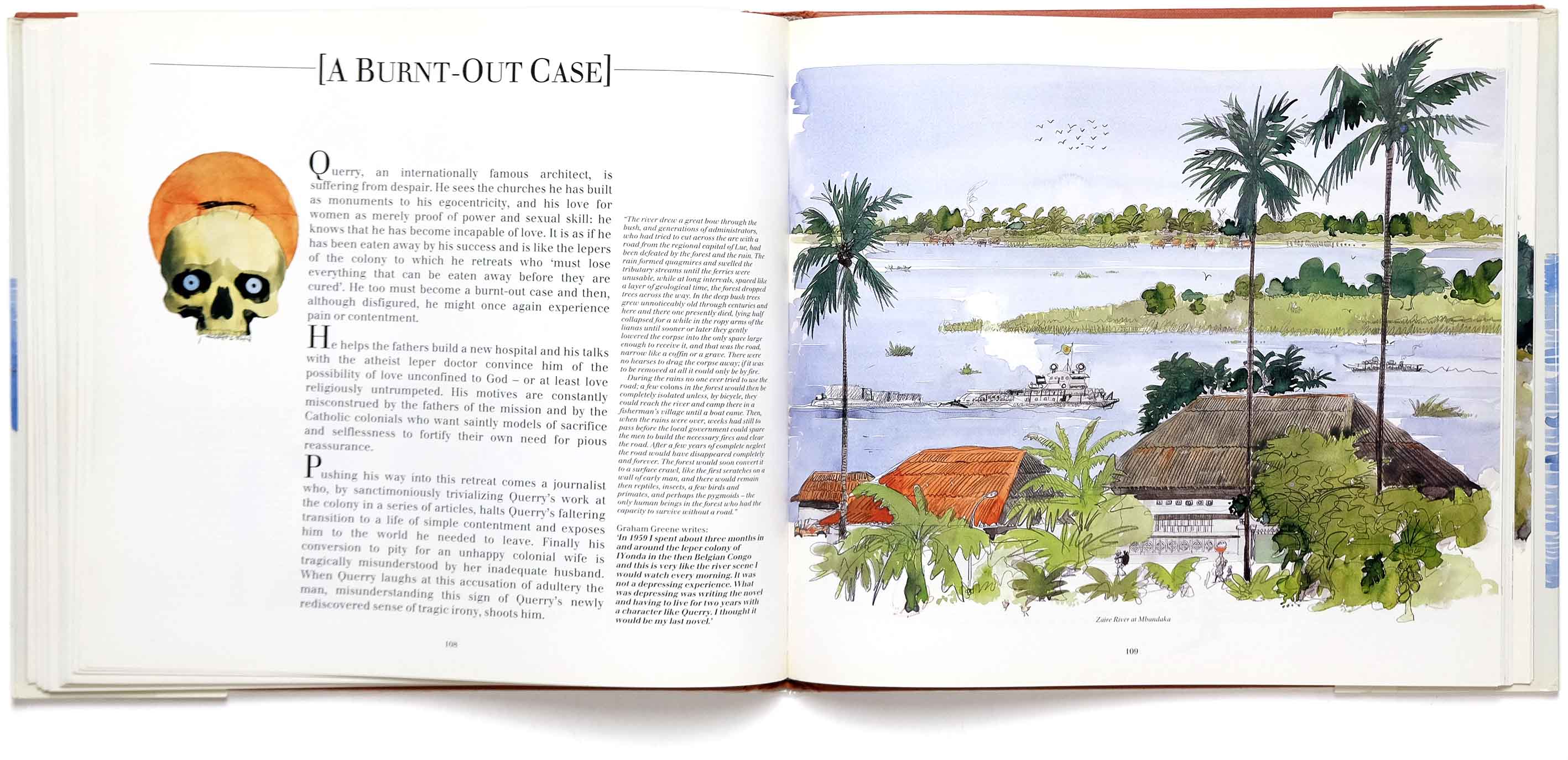
‘Querry, an internationally famous architect, is suffering from despair. It is as if he has been eaten away by his success and is like the lepers of the colony to which he retreats who ‘must lose everything that can be eaten away before they are cured.’ From synopsis
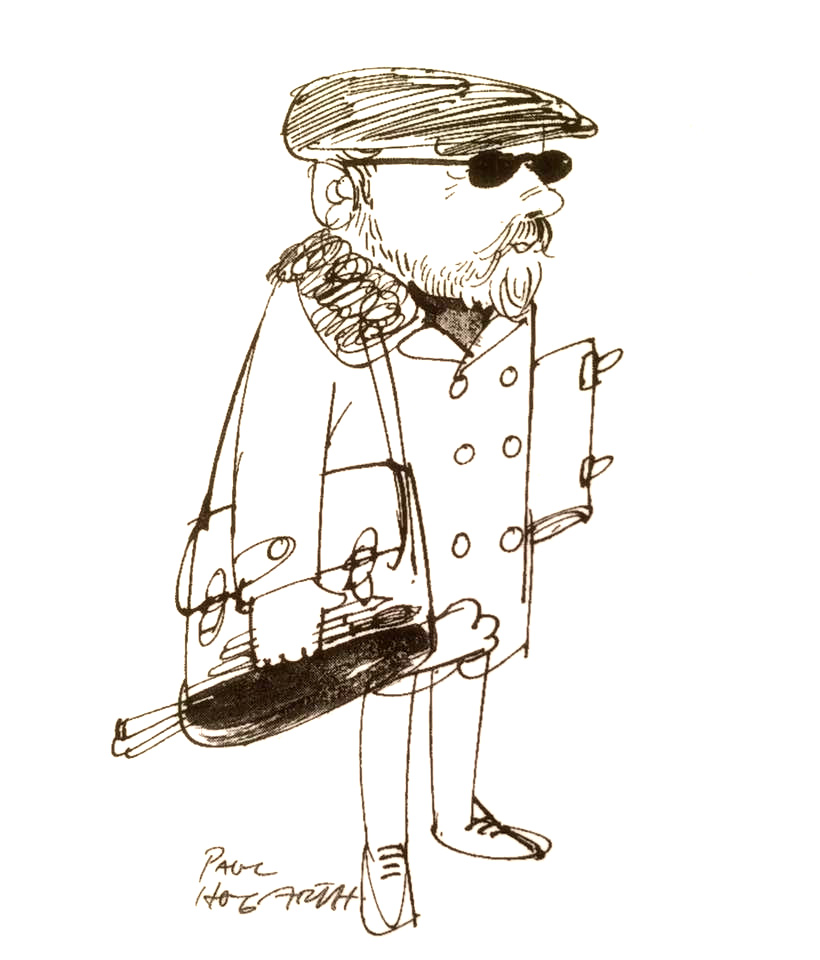
Hogarth travelled extensively in his career as an illustrator. One of his early efforts was as a volunteer in the Spanish Civil War where he drew portraits of soldiers. He often worked as an ‘illustrator-journalist’, much like a photojournalist, observationally. He had a distinctively loose and fluid style in pen and ink, pencil and watercolour.
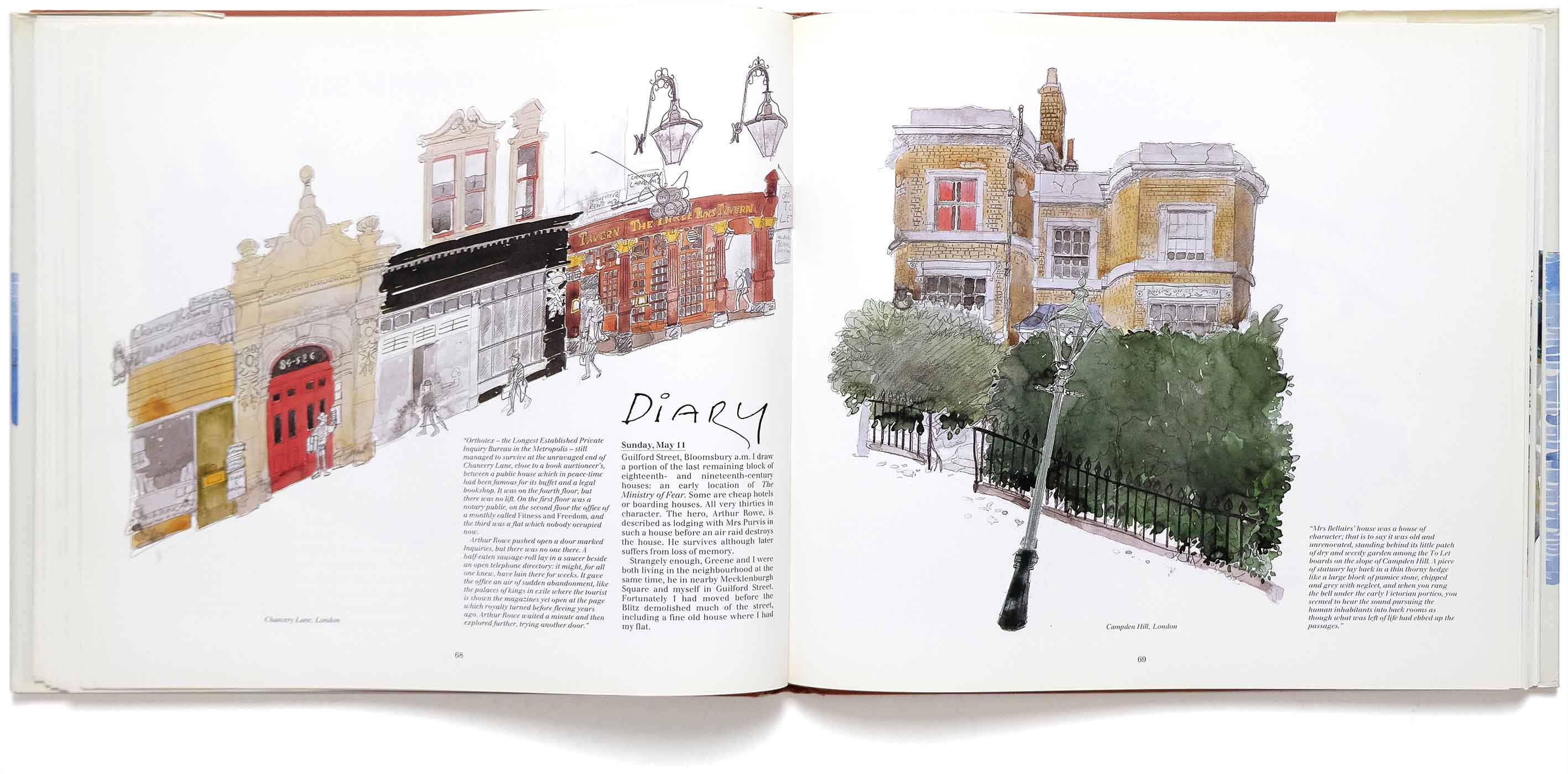
“Mrs Bellair’s house was a house of character; that is to say it was old and unrenovated…and when you rang the bell under the early Victorian portico you seemed to hear the sound pursuing the inhabitants into back rooms as though what was left of life had ebbed up the passages.” Graham Greene, The Ministry of Fear.
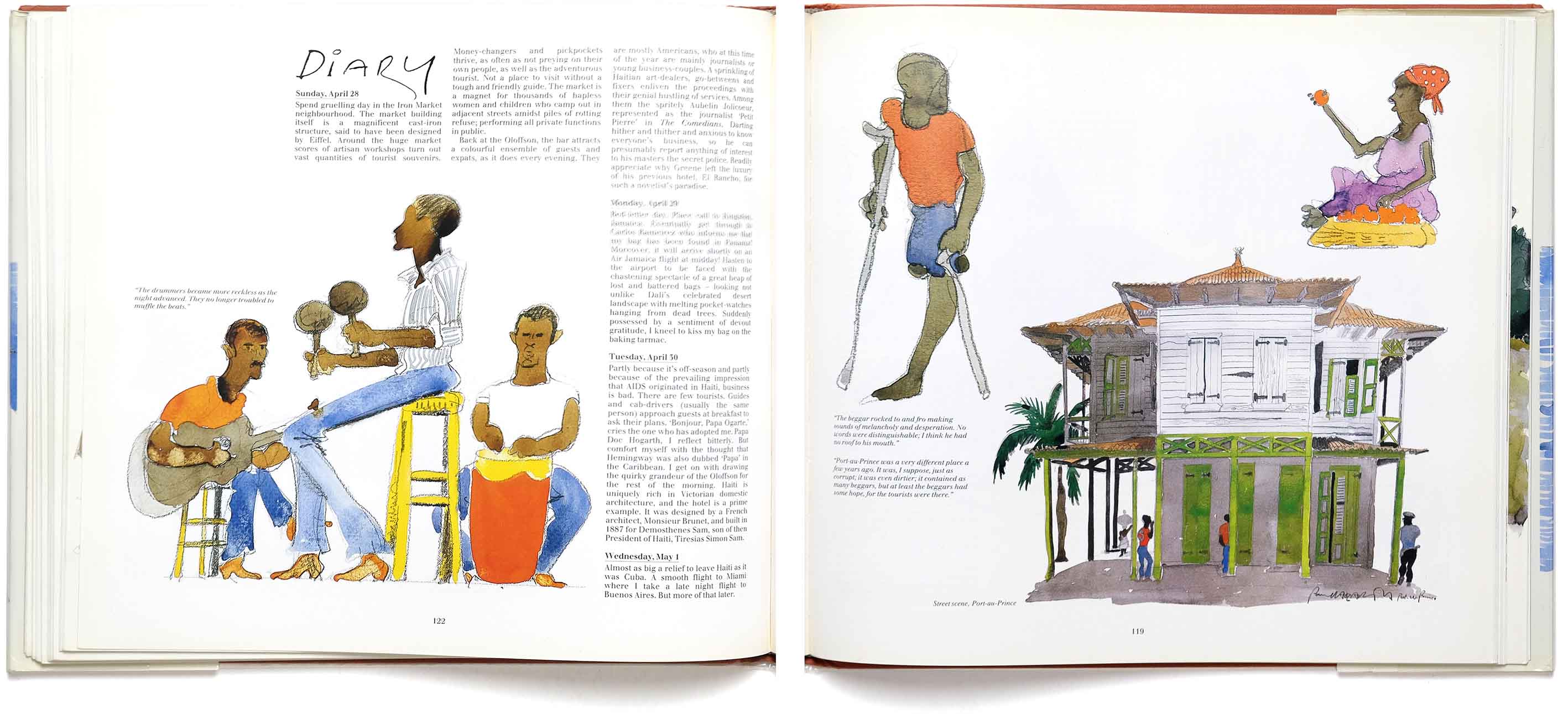
“Port-au-Prince was a very different place a few years ago. It was, I suppose, just as corrupt; it was even dirtier; it contained as many beggars but at least the beggars had some hope, for the tourists were there.” Graham Greene, The Comedians.
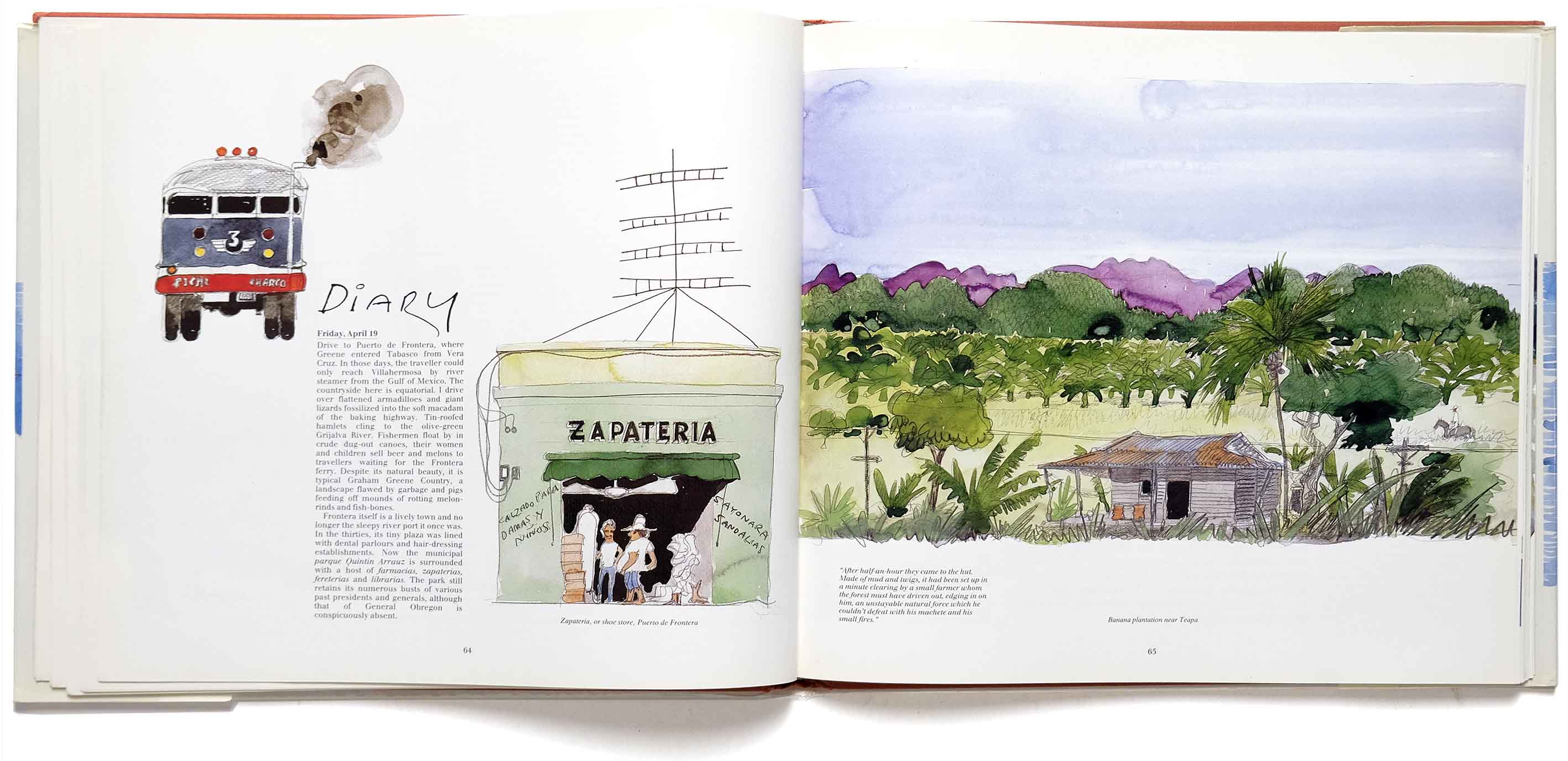
“After half an hour they came to the hut. Made of mud and twigs, it had been set up in a minute clearing by a small farmer whom the forest must have driven out, edging in on him, an unstayable natural force which he couldn’t defeat with his machete and his small fires.” Graham Greene, The Power and the Glory.